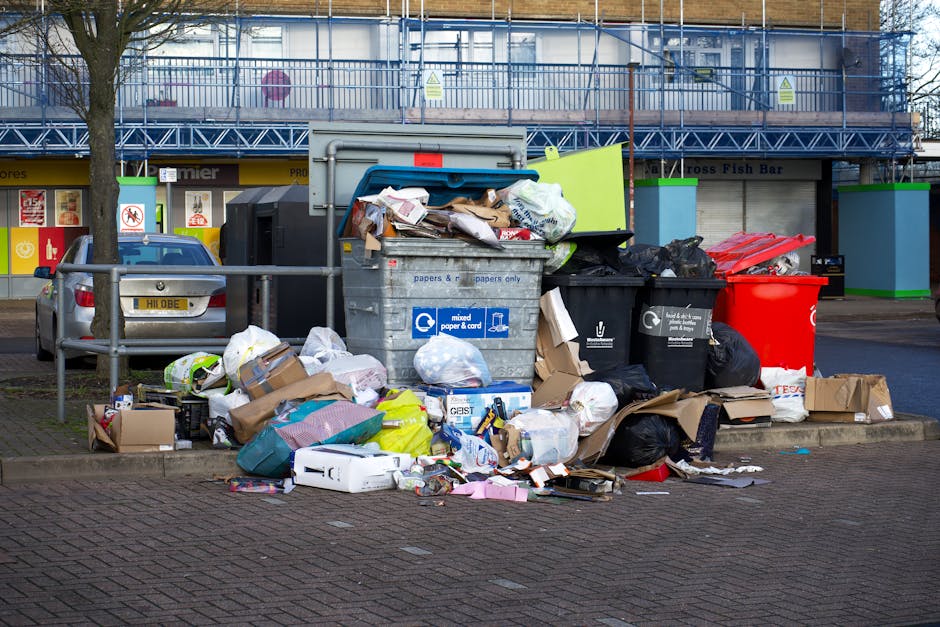
Same day rubbish collection Chessington South station urgent jobs

If you need same day rubbish collection Chessington South station urgent jobs, you are usually dealing with a situation that cannot wait until tomorrow. Maybe a flat needs clearing before a handover, a business unit has bulky waste blocking access, or a last-minute clean-up has to happen before visitors arrive. Whatever the trigger, speed matters, but so does doing it properly. You want the rubbish gone, the space left safe, and no messy surprises afterwards.
This guide breaks down how urgent rubbish collection works in practice, what to expect on the day, where people often go wrong, and how to make a fast clearance feel calm instead of chaotic. It also covers the practical side: what can be removed, how urgent pricing is usually approached, and when a specialist service is the right call. If you are trying to solve a problem near Chessington South station, this should give you a clear plan rather than a vague promise.
Quick expert summary: the best urgent collections are the ones that are prepared properly. Clear access, a simple description of the waste, and a realistic time window make a huge difference. A rushed job does not have to mean a sloppy one.
Why Same day rubbish collection Chessington South station urgent jobs Matters
Urgent rubbish collection is not just about convenience. In a place like Chessington South station, where people are moving quickly, spaces can get tight very fast. A pile of waste outside a property, broken furniture in a hallway, or bags stacked near a business entrance can create practical problems almost immediately. Access gets harder. Safety gets worse. Stress climbs. It is that simple.
Let's face it, when rubbish becomes urgent, the issue is often bigger than the waste itself. A landlord may need a property ready for inspection. A tenant may be leaving at short notice. A shop owner might need to reopen after a delivery mix-up. In those moments, same day collection is valuable because it removes friction from the day and helps you move on.
There is also a reputational side. If visitors, neighbours, customers, or staff see waste sitting around, it sends the wrong signal. A fast clearance protects the appearance of the property and keeps the area usable. You will notice the difference straight away: less clutter, more breathing room, and usually a lot less tension.
For many jobs, urgency is not a luxury. It is the difference between a smooth day and a domino effect of problems.
If the rubbish is part of a larger clearance, it may be worth looking at broader options such as home clearance, house clearance, or office clearance depending on the setting. The point is to match the service to the actual job, not just the headline problem.
How Same day rubbish collection Chessington South station urgent jobs Works
Most same day rubbish collections follow a fairly practical pattern. A customer explains what needs removing, the provider assesses the load, agrees a price or a pricing approach, and then sends a team out within the available time window. Simple on paper. In reality, the speed of the whole process depends on how clear the information is at the start.
Here is the usual flow:
- Initial contact: you describe the waste, location, access, and urgency.
- Assessment: the provider checks whether the job is suitable for same day attendance and whether any special handling is needed.
- Estimate or quote: you should get a clear idea of likely cost based on volume, type of waste, labour, and access.
- Arrival and loading: the team removes the waste manually or with suitable equipment, depending on the job.
- Sorting and disposal: recyclable materials, reusable items, and any restricted waste are handled appropriately.
For urgent jobs, one thing matters more than people expect: access. Is there parking nearby? Can a truck stop safely? Are there stairs, narrow corridors, locked gates, or awkward rear access? A five-minute clarification here can save an hour later. Truth be told, it is often the difference between a tidy same day job and a rushed scramble.
Some urgent removals are straightforward, like a few bags of household waste or a broken wardrobe. Others are more delicate, such as appliance removal, furniture disposal, or mixed waste from a refurb. If you need heavier items taken away, the relevant service pages can help you understand the type of clearance involved, including furniture disposal, fridge and appliance removal, or mattress and sofa disposal.
A good provider will also be upfront about what cannot be taken in the same way as general rubbish. That matters, because not every load is simple mixed waste. Hazardous items, for example, need special handling, and that should never be guessed.
Key Benefits and Practical Advantages
The obvious benefit is speed. But the real value of a proper same day clearance is what it removes from your head as well as your floor. When a job is urgent, the mental load can be surprisingly heavy. Sorting the waste, worrying about access, and trying to guess how much it will cost all pile up together. A responsive collection service cuts through that.
- Fast space recovery: you get the room back quickly, which is especially useful before inspections, deliveries, moves, or reopenings.
- Reduced disruption: less time spent living or working around clutter.
- Safer premises: fewer trip hazards, blocked walkways, and awkwardly stacked items.
- Cleaner presentation: important for landlords, businesses, and shared buildings.
- Better waste handling: a proper service can separate recyclables and dispose of items responsibly.
There is a subtle but real business benefit too. If a shop, office, or rental property is left waiting on rubbish collection, the delay tends to create knock-on effects. Staff lose time. Customers see the mess. Other contractors cannot start. Same day collection helps prevent that chain reaction. It is not dramatic, just practical. And sometimes practical is exactly what you need.
If your waste is mixed with commercial materials, a dedicated business waste removal service may be a better fit than a general one-off clearance. That is especially true where you need regular or repeat support, even if today's job is urgent.
Who This Is For and When It Makes Sense
Urgent rubbish collection makes sense for a fairly wide range of people. It is not only for major clear-outs or dramatic last-minute messes. In many cases, it is simply the sensible option when time is tight and the waste is in the way.
You may need it if you are:
- leaving a property and need to clear remaining waste before check-out or handover
- preparing a flat, house, or room for new occupants
- dealing with post-refurbishment debris or builders' waste
- running a business and need to reopen or stay presentable
- clearing a garage, loft, or garden after weather damage or a sudden change of plans
- handling an estate, inheritance, or downsize with a hard deadline
- trying to remove bulky items that cannot wait another day
Some situations are more urgent than others. A broken sofa sitting in the driveway after a delivery fail is annoying. A corridor blocked by waste in a shared property is more serious. A pile of damp rubbish starting to smell in warm weather, especially after a day or two, becomes both unpleasant and hard to ignore. You can probably picture it. Nobody wants that lingering around.
There is also the smaller domestic scenario: a relative visits tomorrow, the spare room is full of old boxes, and now you have decided, late in the evening, that it all has to go. Happens all the time. Not glamorous, but very real.
Step-by-Step Guidance
If you want the collection to go smoothly, a little preparation goes a long way. Same day does not have to mean last-minute chaos. In fact, the best urgent jobs are usually the best prepared ones.
1. Identify exactly what needs removing
Walk through the property and group the waste by type. Is it bagged rubbish, broken furniture, mixed household junk, building debris, or appliances? The more specific you are, the easier it is to plan the right crew and vehicle.
2. Check access and parking
Look at the route from the waste to the loading point. Are there stairs? Is the lift working? Can a vehicle stop close enough? If access is awkward, mention it upfront. No one likes surprises when they are trying to work quickly.
3. Separate anything sensitive or restricted
Keep documents, valuables, personal items, and anything you want to keep out of the load. If there are confidential papers, a service like confidential shredding may be more appropriate for part of the job than a simple mixed rubbish pickup.
4. Be clear about special waste
If the load includes a fridge, chemicals, sharp items, or anything potentially hazardous, say so early. Special items may need different handling or additional planning. That is not a problem if it is explained properly. It only becomes one if it is hidden until the team arrives.
5. Ask for the expected time window
Same day still needs an honest time frame. Morning, early afternoon, later in the day - all of that matters if you are coordinating cleaners, movers, tenants, or staff. If you need a broader view of pricing, the page on pricing and quotes is a sensible place to understand how estimates are usually handled.
6. Make the area as easy to work in as possible
Move small obstacles, unlock gates, and make sure the waste is ready to go. A few minutes of prep can save real time. And honestly, it makes the whole thing feel much less frantic.
7. Confirm disposal expectations
Ask how the waste will be handled once collected. Reuse, recycling, transfer, and disposal all matter. If sustainability is important to you, it is worth checking a provider's approach to recycling and sustainability.
Expert Tips for Better Results
In our experience, the people who get the smoothest urgent collections do a few small things very well. None of them are difficult, but together they make a noticeable difference.
- Take a quick photo set: a few photos from different angles help explain the job fast. One photo of the pile, one of the access route, one of any awkward items. Done.
- Keep the collection area tidy: even if the waste is messy, try to keep the surrounding route clear.
- Give one main contact person: it avoids confusion if the team needs clarification on arrival.
- Be realistic about volume: underestimating waste is common and can change timings or cost.
- Ask about item breakdown: some things are better removed whole, others should be dismantled first. A quick question saves hassle later.
One small but useful tip: if the job involves a mix of furniture and general waste, group the furniture together. It sounds obvious, but when a team arrives and the load is scattered through three rooms, things slow down. Not dramatically, but enough to matter on a same day job.
If the collection is part of a renovation or rip-out, a specialist builders waste clearance may suit you better than a general rubbish collection. That is especially true when you have rubble, timber offcuts, plasterboard-like debris, or mixed renovation waste. Different waste, different approach.
Common Mistakes to Avoid
Urgent jobs often go wrong for ordinary reasons. The problem is usually not the collection itself, but the prep around it. Here are the most common mistakes people make.
- Waiting until the last minute to describe the waste: vague descriptions lead to vague outcomes.
- Forgetting access issues: stairs, parking, gates, and lifts matter more than people think.
- Mixing waste types without checking: some items need special treatment.
- Leaving valuables in the pile: it happens more often than you would expect.
- Assuming all rubbish can be handled the same way: not every item belongs in a standard collection.
- Trying to overpack bags or hide bulky items: if the team cannot see it clearly, they cannot plan correctly.
Another small mistake? Assuming "urgent" automatically means "anything goes." It does not. A responsible provider still has to consider safety, transport, and disposal rules. That is a good thing, even if it occasionally slows the job by a few minutes.
If you are unsure whether an item is acceptable, check the relevant disposal guidance first rather than hoping it will sort itself out on the day. That bit of patience can save a lot of back-and-forth.
Tools, Resources and Recommendations
You do not need fancy tools for a same day collection, but a few simple things help.
- Phone camera: useful for photos and quick sharing of access or waste condition.
- Bin bags or sacks: helpful for keeping loose rubbish contained.
- Labelled piles: if you have mixed waste, mark what is to stay and what is to go.
- Basic measuring tape: useful for bulky items, doorways, and corridors.
- Notebook or notes app: handy for listing anything special, such as appliances, fragile items, or access instructions.
For larger domestic jobs, browsing related clearance categories can help you choose the right service. For example, garage clearance is useful for stored clutter and bulky odds and ends, while loft clearance fits attic spaces where access is often awkward. For outdoor waste, garden clearance can be a better match than a general rubbish uplift.
If you are comparing service standards, the most useful questions are often the plain ones: What can you take today? How quickly can you come? How is disposal handled? Is the team insured? Are there items you cannot accept? Straight answers are what you want, not marketing fluff.
Law, Compliance, Standards, or Best Practice
When rubbish is collected urgently, compliance still matters. The detail can vary depending on the waste type, but the principle is constant: waste should be handled safely, responsibly, and in line with applicable UK requirements and accepted industry practice. If a collection company is vague about this, that is a red flag.
For everyday jobs, best practice usually includes:
- checking whether any items need special handling
- keeping clear records where appropriate for business waste
- separating recyclables where practical
- using safe lifting and loading methods
- making sure vehicles and disposal routes are suitable for the waste type
For business customers, documentation matters more than many people realise. If waste is being removed from an office, shop, or worksite, you should expect a sensible paper trail and clear communication around what was collected. A service such as business waste removal should feel organised, not improvised.
Special waste needs extra care. A fridge, chemicals, paint, or similar items should not be treated like ordinary household rubbish. For potentially problematic material, a specialised route such as hazardous waste disposal may be necessary. If you are unsure, ask before collection rather than after. Much easier that way.
It is also sensible to check insurance and safety expectations. A reputable provider should be able to explain how they work, how they manage risk, and what happens if access is difficult. That kind of reassurance is worth a lot when the job is time-sensitive. You do not want guesswork near a busy station area or in a shared building.
Options, Methods, or Comparison Table
Urgent rubbish removal is not always the same as every other disposal method. Here is a simple comparison to help you choose.
| Option | Best for | Strengths | Limitations |
|---|---|---|---|
| Same day rubbish collection | Immediate clear-outs, short deadlines, sudden waste problems | Fast, flexible, minimal waiting | May cost more than planned collections |
| Pre-booked clearance | Non-urgent jobs with predictable timing | Easier planning, often more relaxed | Not suitable when speed is the priority |
| Skip hire | Ongoing DIY or renovation waste | Useful for repeated loading over time | Needs space, permits may be relevant, not ideal for same day removal of everything |
| Self-loading and trip runs | Small loads and people with time | Direct control | Time-consuming, tiring, not great for bulky or heavy waste |
For a lot of urgent situations, the "human labour plus fast truck" model wins. It is simply more efficient. If you have a pile of mixed waste and awkward items, you do not want to spend your evening making multiple car trips with a boot full of rubbish. Nobody has the energy for that after a long day, to be fair.
If you are trying to understand what is suitable for a skip and what is not, the guide on what can go in a skip is useful context, even if you are not hiring one. It helps you think in categories: general waste, restricted items, bulky materials, and specialist disposal.
Case Study or Real-World Example
Picture a fairly typical situation. It is late afternoon, and a small rental property near Chessington South station needs to be cleared before keys are handed back the next day. There are old bags in the hallway, a broken bedside unit, a mattress leaning in a bedroom corner, and a few loose items left from a rushed move. Nothing dramatic. Just enough clutter to make the place feel unfinished and awkward.
The first step is simple: identify everything that has to leave. The second is to keep the access route open. The third is to make sure any special items, like the mattress or any appliance, are flagged before the team arrives. With that done, the collection is usually much smoother than the owner expects. The space is cleared, the property looks presentable again, and the handover can happen without that unpleasant "we'll have to come back tomorrow" feeling.
I have seen a similar pattern in offices too. A company has a deadline for a fit-out or an inspection, and suddenly the spare furniture, cardboard, and old equipment become the problem of the day. Not a crisis, just a bottleneck. Once the waste is removed, the room feels instantly bigger. The air changes, almost. There is less echo, less clutter in the eyes, less mental noise. Small thing, big relief.
That is really what urgent rubbish collection does at its best: it removes the thing that is blocking everything else.
Practical Checklist
Use this quick checklist before the collection team arrives.
- Confirm the exact items to be removed
- Separate anything you want to keep
- Check access routes, stairs, lifts, and gates
- Make parking or stopping instructions clear
- Tell the provider about bulky, heavy, or awkward items
- Flag appliances, confidential materials, or special waste
- Keep the collection area as clear as possible
- Have one contact person available by phone
- Ask how pricing is likely to be calculated
- Check whether recycling or sorting will be included where practical
Useful rule of thumb: if you can describe the job in one minute without hesitation, the collection is usually easier to organise. If you find yourself saying "well, it's sort of a lot of different stuff," take another five minutes to sort it properly first.
Conclusion
Same day rubbish collection Chessington South station urgent jobs are really about restoring control quickly. When waste is blocking a move, delaying a handover, or making a property hard to use, speed becomes valuable. But speed works best when it is backed by clarity, decent preparation, and honest expectations.
The best urgent collections are straightforward, safe, and well communicated. You know what is being taken. The provider knows how to reach it. Special items are handled properly. And the job gets done without unnecessary stress. That is the goal. Nothing flashy. Just a clean finish and a clear space.
If you are weighing up your next step, choose the route that matches the waste, the access, and the deadline. A little preparation now saves a lot of hassle later, and sometimes that is the difference between a rough day and a manageable one.
Get a free quote today and see how much you can save.
Frequently Asked Questions
What counts as same day rubbish collection near Chessington South station?
It usually means a collection arranged and completed on the same day, subject to availability, access, and the type of waste. The more clearly you describe the job, the easier it is to confirm.
Can urgent rubbish collection handle bulky items?
Yes, in many cases it can. Bulky furniture, mattresses, and appliances are commonly removed, but they should be described in advance so the right team and vehicle can be arranged.
How fast can an urgent collection happen?
That depends on workload, distance, and access. Some jobs can be attended quickly, while others need a later same day slot. It is best to ask for a realistic time window rather than assume an exact minute.
Is same day rubbish collection more expensive?
It often can be, because fast response services usually need more flexible scheduling. The exact cost depends on volume, waste type, and labour involved, so a clear description helps you get a better estimate.
What if I have mixed waste and furniture together?
That is common. Mixed loads can usually be handled, though separating items where practical can speed things up and sometimes make disposal easier to plan.
Can I book urgent rubbish removal for a flat clearance?
Yes, if the job is time-sensitive and the access details are clear. For more involved clear-outs, flat clearance can be a sensible option, especially where stairs or shared access are involved.
What should I do before the team arrives?
Keep the route clear, separate anything you want to keep, and tell the provider about any awkward items, access restrictions, or special waste. A few minutes of prep really does help.
Can hazardous items be collected on the same day?
Sometimes, but they need to be assessed carefully. Items that may be classed as hazardous should be discussed in advance so the right handling method can be used.
Do I need to be on site during the collection?
Usually yes, or at least someone responsible should be available. That makes it easier to confirm the waste, answer access questions, and deal with any unexpected issues quickly.
Is recycling included with urgent rubbish collection?
Where possible, many providers will sort recyclable material from general waste. The exact approach can vary, so it is sensible to ask how items will be handled after collection.
What if I only have a small amount of waste?
Small loads can still be collected urgently if the timing suits. Sometimes it is more efficient to combine a few items into one visit rather than wait and let the clutter build up.
How do I know if I need business waste removal instead of general rubbish collection?
If the waste comes from a workplace, shop, office, or commercial premises, a dedicated business waste removal service is often more appropriate. It helps keep the job organised and better matched to the setting.
What is the biggest mistake people make with urgent waste jobs?
Usually it is underexplaining the job. If the provider does not know about access issues, bulky items, or special waste, the collection can slow down. Clear information at the start avoids most of that.
Should I choose rubbish collection or skip hire for an urgent job?
If the waste needs to be removed immediately, rubbish collection is often the better fit. Skip hire is better for ongoing loading over time, but it is less flexible when the priority is speed.
When the pressure is on, the calmest solution is usually the simplest one. Clear the access, describe the waste properly, and get the right team moving. That is often enough to turn a stressful day into one you can actually breathe through.